
Concrete Grinding & Surface Preparation
The mechanical slab profiling and crack repair work that makes every coating and sealer bond the way it should - done before any finish is applied.
Learn More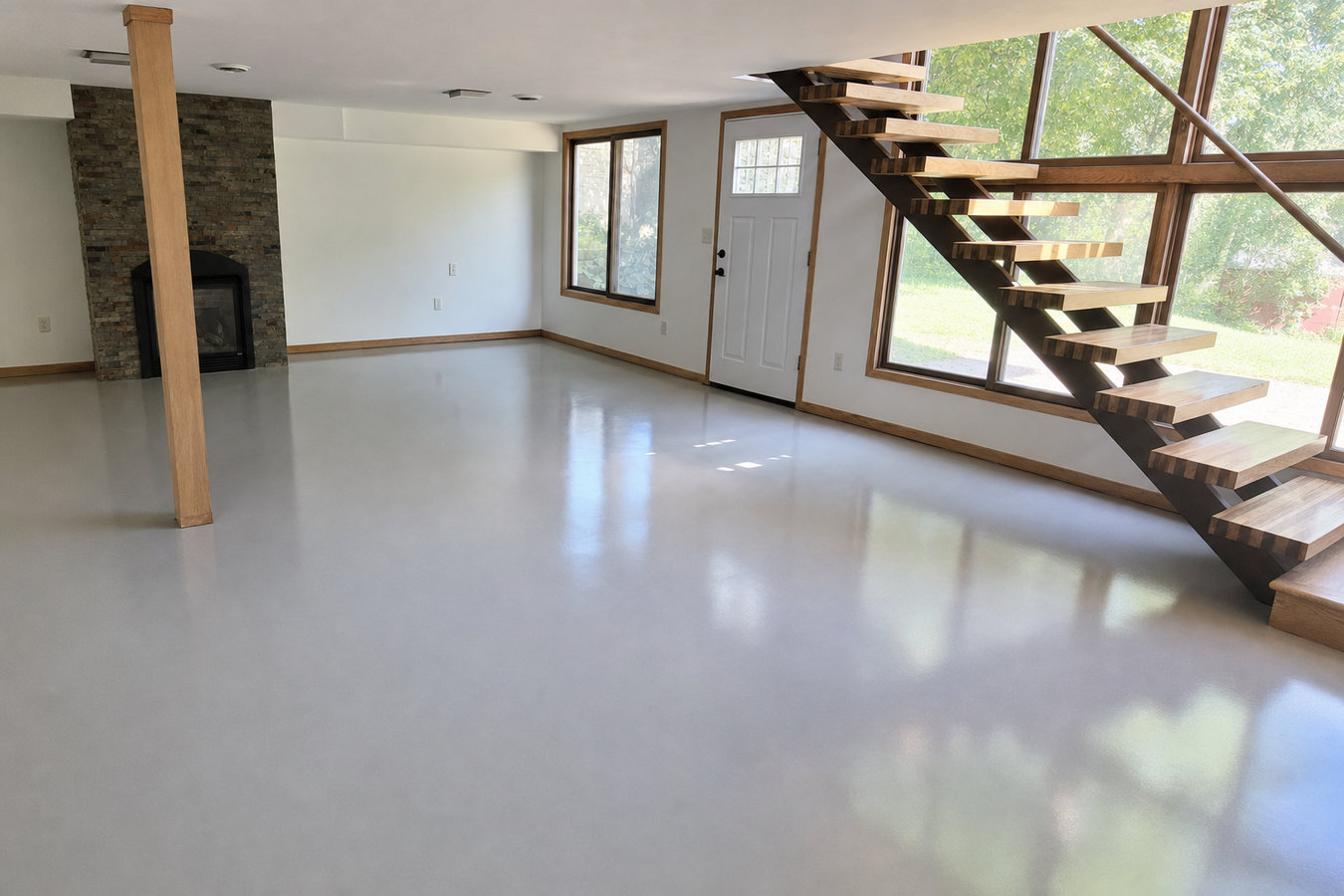
Stop using your below-grade space as a storage room because the floor is not finished. We coat, seal, and polish concrete slabs so your basement or utility space becomes a room you actually want to use.
Basement flooring in San Angelo is the process of preparing and finishing the concrete slab in a below-grade space - whether you want it coated with epoxy, polished to a clean sheen, or simply sealed so it stops dusting and stays easy to sweep. Most jobs take one to three days depending on the size of the space and the condition of the slab.
True full-depth basements are less common in San Angelo than in many other parts of the country - the clay soil and excavation costs mean most homes here have partial below-grade spaces, storm shelters, or utility rooms rather than finished basements. Whatever your space looks like, the starting point is the same: an honest look at the slab. Cracks, moisture, and uneven spots all need to be addressed before any finish goes down, or the coating will fail prematurely. We work well alongside our concrete grinding and surface preparation service, which handles the slab-level work before the finish coat is applied.
Hairline cracks in a basement slab are common, but cracks that are widening, have edges at different heights, or run in a pattern across the floor are a sign the slab has been moving. In San Angelo, this is often caused by clay soil expanding and contracting with the seasons - a clear signal the slab needs attention before any finish is applied.
If your basement floor leaves a fine gray dust on your shoes or on anything you set down, the concrete surface is deteriorating - a condition called dusting or spalling. This means the slab is no longer sealed or protected. A fresh coating or sealer stops the dusting and gives you a surface that stays clean.
A musty smell in the basement or white chalky deposits on the concrete surface are signs that moisture is moving up through the slab from the soil below. In San Angelo, this can happen after a heavy rain saturates the ground around the foundation. This is not just cosmetic - moisture moving through a slab will destroy any flooring applied on top if not addressed first.
If an older epoxy or paint coating on your basement floor is lifting away in patches, that coating has failed - usually because of moisture underneath or poor prep when it was originally applied. Peeling cannot be patched effectively. The old coating needs to come off and the slab must be properly prepared before anything new goes down.
We offer three main finish options for below-grade concrete slabs, and the right choice depends on how the room will be used and the current condition of your concrete. Concrete sealing is the most straightforward - we clean the slab, repair any cracks or low spots, and apply a penetrating sealer that stops dusting and makes the surface easy to mop. It is the right choice for utility rooms, storage spaces, or any area where appearance is secondary to durability and cleanliness. Epoxy coatings add color, protection, and optional grip texture - useful for gyms, workshops, or spaces that will see heavy foot traffic. Every project starts with mechanical surface preparation: we grind or profile the slab so the coating bonds correctly, because a coating applied over an unprepared surface will peel. We pair all basement work with our concrete grinding and surface preparation process to make sure the slab is ready before any finish goes down.
Polished concrete is the third option - we grind the existing slab progressively finer until it reaches a smooth, low-gloss or high-gloss finish. It does not trap allergens the way carpet does, holds up to heavy use without showing wear quickly, and is one of the easiest floors in the house to keep clean. After completion, the floor benefits from a fresh topcoat sealer every three to five years - a straightforward maintenance step your contractor will walk you through before leaving. For homeowners who want to protect both interior and exterior concrete, our concrete sealing service covers driveways, walkways, and other flat surfaces as part of the same project.
Utility rooms and storage spaces where the goal is a clean, dust-free surface that is easy to sweep and maintain without a full decorative finish.
Home gyms, workshops, and any below-grade space that sees heavy use and needs color, grip texture, and a hard surface that resists oil and wear.
Homeowners who want a refined, low-maintenance floor in a finished basement or living space - no carpet, no grout lines, just clean concrete.
Any basement slab that shows cracks, has settled unevenly, or shows signs of moisture moving up from the soil - addressed before any finish is applied.
San Angelo's clay-heavy soil is the biggest factor in any below-grade concrete project. The ground across Tom Green County swells when it absorbs water and shrinks during the long dry spells that are common here - and that movement causes concrete slabs to crack and shift over time. Any contractor who skips a slab inspection before applying a coating is setting that floor up to fail, because a coating applied over a moving or cracked slab will bubble and peel within months. We check every slab for cracks and moisture before quoting the finish work, and we repair what we find before any product goes down. Homeowners in Christoval and Carlsbad face the same clay soil and moisture cycle as San Angelo proper, and we bring the same assessment process to every job across the area.
San Angelo's climate adds another layer of consideration. The city sees fewer than 20 inches of rainfall per year on average but does experience periodic heavy rain events that can saturate soil around a foundation quickly. If your below-grade space has ever shown water intrusion after a big rain, that moisture question needs to be answered before any flooring is applied - not after. The intense West Texas summers also matter for product selection: coatings and sealers need to be rated for high-heat environments, because standard products can degrade or yellow when a space is not climate-controlled. We choose products suited to what San Angelo actually puts a floor through, not what works in a milder region. The EPA's mold and moisture guidance is a useful reference for understanding why moisture assessment matters before any floor coating is installed in a below-grade space.
We respond within one business day. We will ask about the size of the space, what you want the floor to look like, and whether you have noticed any cracks or moisture issues. Most contractors in San Angelo schedule a free on-site visit before giving a firm price, because the slab condition makes a real difference in what the job costs.
We walk the basement, inspect the slab up close, and check for cracks, uneven spots, and signs of moisture. If there is any reason to suspect water is moving through the slab, we do a simple moisture test before recommending a finish. This visit is also your chance to ask questions and get a written estimate that covers everything we find.
We grind or profile the slab surface so the coating bonds properly, fill any cracks or low spots, and clean the floor thoroughly. If moisture mitigation is needed, that work happens here. Do not be alarmed by the noise and dust - this prep stage is what separates a floor that lasts from one that peels within a year.
Once the slab is prepped, we apply the coating, sealer, or polish. The space needs to stay clear and undisturbed while the product cures - typically 24 to 72 hours. Before we leave, we walk the floor with you, point out any areas to watch, and give you care instructions for the product we used.
Free on-site estimate. Slab inspection included. Written quote before any work begins. No obligation.
(325) 292-0567We test the slab for moisture before recommending a finish - not after the coating fails. A coating applied over a slab that has moisture moving through it will peel, and San Angelo's periodic heavy rain events make this a real risk. Finding that issue first protects your investment.
Standard epoxy coatings can soften, yellow, or degrade in spaces that are not climate-controlled when summer temperatures push past 100 degrees. We select coatings and sealers rated for high-heat environments so the finish holds up through multiple San Angelo summers without discoloring or breaking down.
We list slab prep, crack repair, and finish application as separate line items so you see the full cost upfront. San Angelo homeowners have told us their biggest fear with contractors is a low quote that doubles by the end of the job. That does not happen when the estimate is itemized before anyone picks up a tool.
The American Concrete Institute sets the professional standard for concrete surface preparation, and we follow those guidelines for every project - proper profiling, correct cleaning, and appropriate crack repair methods. That standard is a meaningful difference from contractors who skip prep and go straight to the coating.
Every one of those points comes back to the same thing: a floor that holds up to what San Angelo actually puts it through - clay soil movement, periodic moisture, and intense summer heat - and a process that keeps you informed at every step. The American Concrete Institute is the leading professional body for concrete work standards in the United States and a useful reference if you want to understand what proper prep and application looks like.
The mechanical slab profiling and crack repair work that makes every coating and sealer bond the way it should - done before any finish is applied.
Learn MorePenetrating and topcoat sealing for interior and exterior concrete slabs that need moisture protection and a dust-free surface without a full decorative coating.
Learn MoreSan Angelo summers are hard on unprotected concrete - reach out now to get your slab assessed and your project on the schedule.