
Pool Deck Coatings & Resurfacing
Slip-resistant, heat-reflective coatings and resurfacing for pool decks that take the full force of a San Angelo summer.
Learn More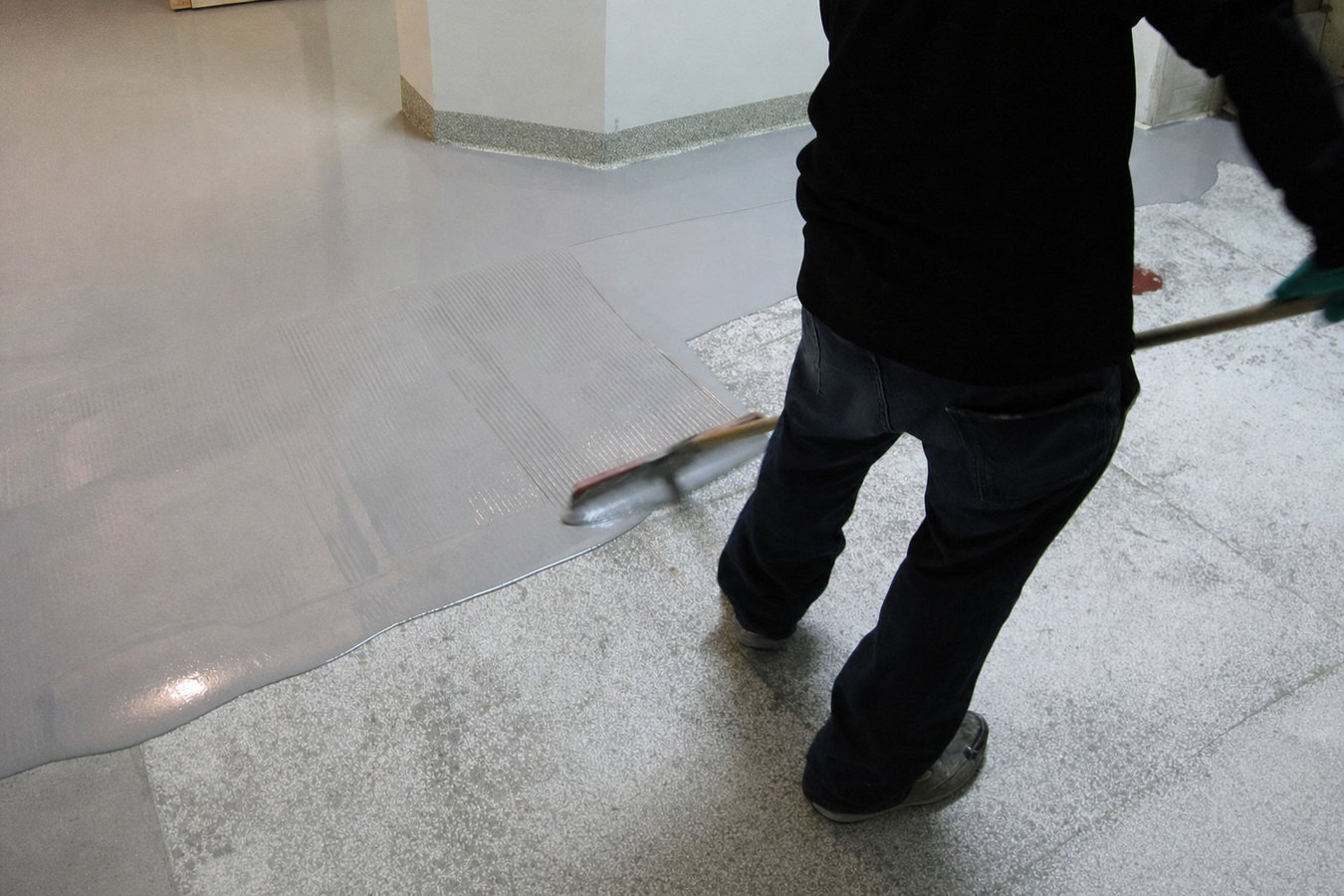
Floors that dip, slope, or keep cracking the tiles on top are a slab problem. We pour self-leveling concrete to correct the surface so whatever goes on top finally lasts.
Self-leveling concrete is a specially mixed material that spreads itself flat when poured onto a floor - it flows into low spots, fills in dips, and dries to a smooth, even surface in San Angelo without a lot of manual finishing work, and most single-room or garage projects are completed in one to two days from prep to pour.
In San Angelo, this service is particularly relevant because the city sits on clay-heavy soil that swells and shrinks with every wet and dry season - and that movement is one of the main reasons floors in this area settle unevenly over time. If your tile or laminate keeps cracking in the same spots, the problem is almost certainly the uneven slab underneath, not the flooring itself. Fixing the slab first is the only lasting solution. For outdoor surfaces that need a fresh bonded layer rather than full leveling, our concrete resurfacing and overlays service handles that work.
If you notice a marble rolling on its own, a door dragging on the floor, or a slight tilt when you stand in the middle of a room, your slab has likely settled unevenly. This is one of the most common issues in San Angelo homes built on clay-heavy soil, where the ground shifts with the seasons. Self-leveling concrete is designed specifically to correct this kind of unevenness before new flooring goes down.
When the floor underneath is not flat, the flooring on top takes the stress and eventually fails - tiles crack along grout lines, laminate planks buckle, or vinyl develops bubbles. If you have replaced flooring more than once and the same problem keeps coming back, the issue is almost certainly the uneven slab underneath, not the flooring material. Fixing the slab first is the only lasting solution.
Older San Angelo slabs - especially in garages and utility rooms - often develop a rough, flaky surface over time from years of temperature swings, moisture, and use. If the surface feels gritty underfoot or chunks are coming loose, a concrete overlay can restore a clean, durable surface without the cost of full replacement. This is especially common in homes built before the 1990s.
Most flooring manufacturers require the subfloor to be flat within a tight tolerance before installation. If a flooring store or contractor has told you the floor needs to be leveled first, self-leveling concrete is the standard fix. Skipping this step voids most flooring warranties and leads to premature failure - often within the first year.
We handle self-leveling pours for interior floors that have settled unevenly, surface overlays for slabs that look worn or dated, and decorative overlay work for garages, patios, and open-plan interior spaces. Every job starts the same way: we walk the floor, check for soft spots or bounce, test for moisture coming up through the slab, and assess whether the existing concrete is stable enough to support an overlay. In San Angelo, that moisture test is not optional - it is a standard step because slab-on-grade construction and seasonal rainfall make moisture intrusion a common and often invisible problem. We address moisture issues before any material goes down, every time. For outdoor surfaces that need a resurfaced layer rather than a leveling pour, we connect the work directly to our concrete resurfacing and overlays service so the right approach is applied to the right surface.
For decorative projects, finish options are wider than most homeowners expect. Modern overlays can be tinted in dozens of colors, stamped with patterns that mimic brick or stone, or polished to a high shine. Sealed overlays are easy to clean and resist staining when maintained properly - which matters for the garages and outdoor spaces that see the most traffic. For projects that also involve removing old coatings or significant surface buildup before an overlay can go down, we bring in the tools and experience from our pool deck coatings and resurfacing work when decorative outdoor surfaces are involved, ensuring the prep is matched to the finish chosen.
Rooms or garages with settled, uneven slabs that need to be corrected before new flooring or a decorative finish is installed.
Homeowners who want a seamless, modern floor finish throughout an open-plan space without the grout lines of tile or the upkeep of hardwood.
Garage floors with surface deterioration, staining, or old coatings that need a clean, durable new surface at a lower cost than full slab replacement.
Any space where new tile, laminate, or vinyl is planned and the existing slab is not flat enough to meet the flooring manufacturer's installation requirements.
The Tom Green County area sits on Permian Basin soils with a high clay content that swells when wet and shrinks when dry. This constant movement puts stress on concrete slabs from below, which is why so many San Angelo homes develop uneven or cracked floors over time. Before any overlay or self-leveling pour, a good contractor will check whether the slab movement has stabilized - if the soil is still actively shifting, the new surface will not hold. San Angelo also regularly sees summer temperatures above 100 degrees, and that heat can cause self-leveling material to dry too fast if poured in an unshaded space. When concrete cures too quickly it can crack or develop a weak surface layer, which is why experienced local contractors schedule pours for early morning and may adjust the mix to account for the heat. Homeowners in Miles and Rowena deal with the same clay soil and summer heat conditions, and we apply the same careful assessment process to every job across the region.
Many homes in San Angelo's established neighborhoods - including areas near Southland and the older subdivisions along Knickerbocker Road - were built in the 1960s through 1980s. Slabs from that era are more likely to have settled unevenly, developed surface scaling, or had previous floor coverings removed that left adhesive residue. This prep work adds time and cost compared to resurfacing newer concrete, so homeowners in older parts of the city should ask contractors specifically about surface preparation before accepting any estimate. West Texas also experiences cycles of extended drought followed by heavy rainfall, and if your floor has recently developed new cracks or unevenness after a wet season, it is worth confirming the movement has stopped before committing to an overlay. The National Weather Service in San Angelo tracks the local weather patterns that directly affect concrete work schedules and curing timelines in the area.
Call or use the contact form to describe the area - size, what is on the floor now, and what you are planning to put on it next. We reply within one business day and can often give you a ballpark range before visiting, so you know the work is in your budget before scheduling a site visit.
We walk the floor, check for soft spots, look at crack patterns, and test for moisture coming up through the slab - a standard step in San Angelo because of the clay soil and slab-on-grade construction. You get a written estimate covering prep, materials, and finishing before any work is scheduled.
Before the pour, the crew grinds or cleans the existing floor, fills deep cracks, and applies a primer coat so the new material bonds properly. This prep work is often the most time-consuming part of the job and is what separates a lasting result from one that fails in a year.
The self-leveling material is poured, guided into corners and edges, and left to cure. Once cured, a sealer or topcoat is applied and the crew walks the finished floor with you to confirm you are satisfied and to answer questions about care and maintenance going forward.
Free estimate, written quote, no pressure. We reply within one business day.
(325) 292-0567Moisture coming up through a San Angelo slab is one of the most common reasons an overlay fails within a year or two - and most homeowners have no idea it is happening until the damage is done. We test before we pour on every job, and we address any moisture issues before a single coat goes down. You will know exactly what we found and what we did about it.
We have been working on concrete in San Angelo since 2016 and we understand how the local clay soils affect slab stability. We will tell you honestly whether the slab movement has stabilized before recommending an overlay - because committing to a decorative finish over an actively shifting slab is a waste of your money.
Pouring concrete in a West Texas summer is genuinely tricky - the heat can cause material to set too fast and crack before it is fully cured. We schedule and manage the work with San Angelo's climate in mind, using early-morning start times and the right mix for hot conditions. You get a result that holds up, not one that looks fine on day one and develops problems by fall.
Our written estimates break out prep, materials, and finishing separately so you can see exactly where the money is going. The Texas Department of Licensing and Regulation requires contractors in covered trades to be licensed and accountable - and a clear written estimate is a sign of a contractor who operates that way. No surprise line items, no pressure to decide before you are ready.
Every one of these points comes up in real conversations with San Angelo homeowners before they hire us. Local experience, moisture testing, and transparent pricing are the things that actually matter when you are fixing a floor that has already failed once.
Slip-resistant, heat-reflective coatings and resurfacing for pool decks that take the full force of a San Angelo summer.
Learn MoreApply a fresh bonded layer over a structurally sound but worn or stained outdoor slab - without tearing it out and starting over.
Learn MoreSpring slots fill fast and summer heat limits when this work can be done correctly. Call today or request a free estimate and we will get back to you within one business day.